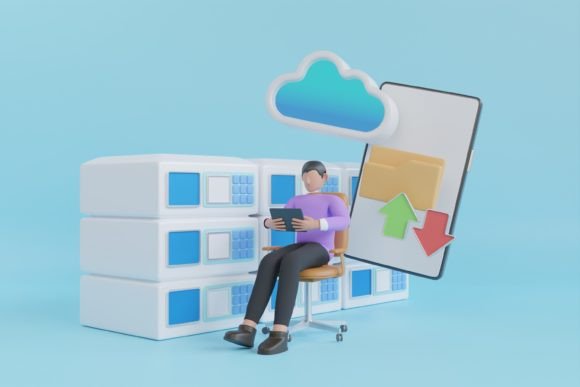
3D Cloud Computing Technology: Transforming Digital Design and Collaboration
As digital landscapes evolve, professionals across industries are seeking innovative tools to streamline workflows and elevate the quality of their outputs. One such advancement gaining traction is 3D Cloud Computing Technology. This emerging field combines the power of cloud infrastructure with three-dimensional design capabilities, enabling creators, developers, and businesses to work more efficiently and collaboratively than ever before.
The Rise of 3D in Everyday Digital Work
In recent years, the use of 3D elements has expanded far beyond gaming and animation. Web designers, app developers, UI/UX specialists, marketers, and educators are now integrating 3D visuals into their projects to create more immersive and engaging experiences. Whether it’s a product showcase on an e-commerce site or a data visualization for a presentation, 3D content adds depth and realism that flat designs simply can’t match.
However, creating and managing 3D assets traditionally requires high-performance hardware, specialized software, and significant storage capacity. These barriers have limited widespread adoption, especially among freelancers and small businesses. That’s where 3D Cloud Computing Technology steps in — offering a scalable, accessible solution to handle complex 3D tasks without the need for expensive local resources.
What Is 3D Cloud Computing Technology?
3D Cloud Computing Technology refers to the use of cloud-based platforms to process, render, store, and collaborate on 3D models and animations. Instead of relying solely on your computer's GPU and CPU, this technology offloads intensive computations to remote servers, allowing you to work with high-quality 3D graphics using just a browser or lightweight application.
- It enables real-time rendering of complex 3D scenes.
- Supports collaborative editing from anywhere, at any time.
- Reduces the need for high-end workstations by leveraging cloud computing power.
- Offers scalable storage for large 3D files and assets.
This shift is not only changing how we create but also how we share and present 3D content across various mediums, including websites, mobile apps, social media, and print materials like posters and banners.
How It Fits Into Modern Workflows
With the rise of remote work and global teams, having access to shared 3D environments is becoming essential. 3D Cloud Computing Technology allows multiple stakeholders to view, modify, and approve designs simultaneously, regardless of location or device. For example, a UI/UX designer in New York can collaborate with a developer in Tokyo and a marketing team in London — all working on the same 3D interface mockup in real time.
This seamless integration is particularly valuable for startups and agencies looking to reduce overhead while maintaining high standards. The ability to render and manipulate 3D graphics in the cloud means less downtime, faster iteration cycles, and easier file management. No longer do you need to transfer large files back and forth; instead, everything is stored securely in the cloud and accessed instantly.
Evolution and Growing Attention
While cloud computing has been around for decades, its application to 3D design is relatively new. Early attempts involved simple model hosting or basic rendering services. Today, thanks to improvements in bandwidth, server performance, and APIs, cloud platforms can handle full 3D pipelines — from modeling to animation to final output generation.
Several factors have driven this evolution:
- Increased demand for visually rich content in marketing and education.
- Advancements in web technologies (e.g., WebGL, AR/VR integrations).
- Growing accessibility of powerful cloud GPUs and rendering farms.
- A cultural shift toward digital-first and immersive experiences.
These developments have made it possible for even non-technical users to experiment with 3D content creation. Tools like hello, this is a 3D design about 3D Cloud Computing Technology exemplify this trend by providing ready-to-use templates and assets that can be quickly adapted for different purposes — whether you're building a website, designing an app, or preparing promotional material for social media.
Practical Implications Across Industries
3D Cloud Computing Technology isn't just a buzzword — it's a practical tool reshaping creative and technical fields. Here are some ways it's making an impact:
For Creators and Designers
Designers working on posters, banners, or UI/UX elements can now incorporate dynamic 3D visuals without heavy software installations. With cloud-based tools, they can test different angles, lighting effects, and textures in real time. The result? More compelling visuals that stand out in crowded digital spaces. And when it's time to export, the final files are typically available in common formats like JPG and PNG, ready for immediate use.
For Marketers and Social Media Managers
Consumers today expect more than static images — they want interactive and immersive content. 3D models hosted in the cloud can be embedded directly into web pages or social media posts, giving audiences a more engaging way to interact with products or brand stories. A car dealership might use 3D models of vehicles rotating in real time to showcase features, while a fashion brand could offer 3D views of clothing items to improve online shopping experiences.
For Educators and Presenters
3D Cloud Computing Technology is also revolutionizing education and training. Teachers can build interactive 3D diagrams for biology, engineering, or architecture classes, and students can explore them from their own devices. In corporate settings, presentations featuring 3D data visualizations are more effective in conveying complex information clearly and memorably.
For Business Owners and Entrepreneurs
Small businesses and entrepreneurs benefit from the cost-effectiveness of cloud-based 3D solutions. They no longer need to invest in high-end computers or expensive software licenses to produce professional-grade visuals. Platforms like hello, this is a 3D design about 3D Cloud Computing Technology provide intuitive tools and pre-made assets that can be customized and exported as needed, helping business owners stay competitive without breaking the bank.
Real-World Examples and Use Cases
Let’s look at a few examples of how 3D Cloud Computing Technology is being used effectively today:
- E-commerce Product Displays: Brands use 3D models of products to allow customers to rotate and zoom in, enhancing the online shopping experience.
- Architectural Visualization: Architects collaborate in real time on 3D blueprints, making revisions and sharing updates with clients through cloud-based viewers.
- App Development Prototypes: Developers use 3D tools in the cloud to build interactive app interfaces and test them across devices before deployment.
- Social Media Banners and Ads: Marketers create eye-catching 3D visuals for banners and ads that pop on both desktop and mobile screens.
Each of these scenarios demonstrates the versatility and efficiency of moving 3D workflows into the cloud. As tools become more user-friendly and cloud infrastructures more robust, the line between professional and amateur-level 3D design is rapidly blurring.
Why Choose a 3D Design Like hello, this is a 3D design about 3D Cloud Computing Technology
If you’re involved in any kind of digital project, consider how a pre-built 3D design like hello, this is a 3D design about 3D Cloud Computing Technology can save you time and effort. These types of resources are ideal for individuals who want to leverage 3D visuals without diving deep into complex modeling software. You get a polished base to work with, which you can tweak and adapt to suit your needs — whether you're building a portfolio, launching a campaign, or designing a new app.
The fact that the files are delivered in standard formats like JPG and PNG makes them incredibly easy to integrate into existing projects. You don’t need to worry about compatibility issues or learning new tools to make them work. Just download, adjust, and deploy — perfect for fast-moving environments like digital marketing or web development.
Looking Ahead: What’s Next for 3D Cloud Computing?
As internet speeds increase and cloud infrastructure becomes more intelligent, the future of 3D Cloud Computing Technology looks promising. We can expect further integration with AI-driven design tools, real-time collaboration enhancements, and improved cross-platform support. These advancements will continue to lower the barrier to entry for 3D design, encouraging more people to adopt it in their creative processes.
Additionally, the growing popularity of augmented reality (AR) and virtual reality (VR) will likely push 3D cloud computing to new heights. Imagine developing a VR experience entirely in the cloud, with collaborators viewing and interacting with the same 3D environment from different locations. The possibilities are expanding every day.
Tips for Getting Started with 3D Cloud Computing
If you're considering integrating 3D Cloud Computing Technology into your workflow, here are a few tips to help you begin:
- Start with a clear goal — are you trying to enhance a website, create a marketing campaign, or develop an app?
- Choose a platform that aligns with your skill level and project needs. Many cloud-based 3D tools offer free trials or tiered pricing models.
- Explore pre-designed 3D templates or assets to speed up your initial projects. Resources like hello, this is a 3D design about 3D Cloud Computing Technology can serve as excellent starting points.
- Export your final designs in widely supported formats like JPG or PNG to ensure compatibility with your target platforms.
- Stay updated on new features and trends in cloud-based 3D tools to keep your skills relevant.
By taking advantage of these strategies, you can harness the potential of 3D Cloud Computing Technology without getting overwhelmed by the complexity often associated with 3D design.
Conclusion
3D Cloud Computing Technology is more than just a passing trend — it's a fundamental shift in how we approach digital design. By combining the flexibility of cloud computing with the creativity of 3D modeling, this technology opens new doors for innovation across disciplines. From UI/UX design to social media promotion, the applications are vast and growing.
Tools like hello, this is a 3D design about 3D Cloud Computing Technology are empowering individuals and teams to bring their ideas to life with minimal hassle. As the industry continues to mature, those who embrace these changes early will find themselves better equipped to meet modern user expectations and market demands.