What Is a 3D Rendered Isometric Work Cubicle and Why It Matters in Design Projects
In the world of design, visualization plays a crucial role in bringing ideas to life. One popular and effective method used by designers, architects, and business professionals is the 3D rendered isometric work cubicle. This type of visual representation helps showcase modern office environments in a clear, structured way. Whether you're planning an office layout, creating marketing materials for coworking spaces, or just exploring interior design concepts, understanding what a 3D rendered isometric work cubicle is—and how it can be used—can significantly enhance your project's clarity and appeal.
Understanding the Basics: What Is a 3D Rendered Isometric Work Cubicle?
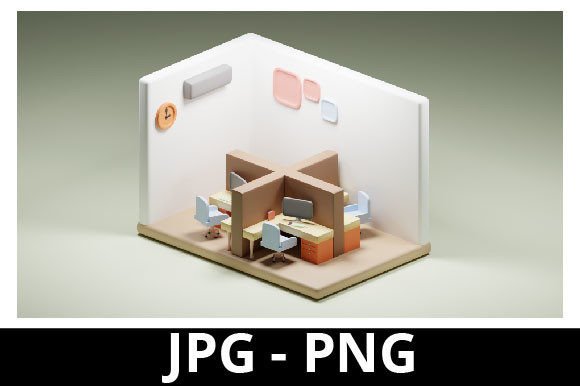
A 3D rendered isometric work cubicle is a digital illustration that depicts a work area from an isometric perspective. This means the image is created at a 30-degree angle, allowing viewers to see all three dimensions (length, width, and height) equally. Unlike traditional 2D floor plans or fully realistic 3D renderings, isometric views offer a balanced mix of technical accuracy and visual simplicity.
The term "cubicle" refers to a small partitioned workspace commonly found in corporate offices. When this concept is combined with 3D rendering and isometric projection, it results in a clean, informative graphic that represents a modern office setting with furniture such as desks, chairs, monitors, PCs, and cabinets. These images are often part of a ZIP folder containing multiple file types like JPG and PNG, which makes them easy to use across various platforms and applications.
Key Elements Found in a 3D Rendered Isometric Work Cubicle
- Cabinet: Storage units are essential in any workspace. In an isometric rendering, they help define the space and show how items can be organized.
- Desktop and Desk: The central piece of the cubicle, representing where the worker performs their tasks. A well-designed desk contributes to both aesthetics and ergonomics.
- Worker/Professional: Often represented as a stylized figure or silhouette, this adds context to the environment and shows scale.
- Monitor and PC: These elements highlight the technology involved in the workspace and are vital for showing the nature of the job being performed.
- Modern Office Interior: The overall look of the cubicle reflects contemporary design trends, including open spaces, minimalist furniture, and neutral color palettes.
- Low Poly Style: Many isometric designs use low polygon modeling to keep visuals crisp and easily scalable without losing quality.
- Furniture and Interior: Additional components like chairs, tables, and lighting fixtures complete the scene and add realism.
The Purpose and Significance of Isometric Work Cubicles in Design
Isometric renderings serve several important functions in design and business contexts. They are not just decorative but provide valuable information to stakeholders and end users alike. Here’s why these images matter:
Clarity and Communication
When presenting a new office layout or a coworking space design, an isometric view allows clients and team members to understand spatial relationships quickly. The equal representation of each axis makes it easier to grasp how different elements interact within the room, such as the placement of computers, storage units, and seating arrangements.
Efficient Planning and Visualization
Designers and architects often use isometric views during the early stages of planning. These renderings help visualize how a space will function before any physical construction takes place. For instance, when designing a modern office interior, an isometric work cubicle can show how much room each employee has and whether the layout supports teamwork or individual focus.
Marketing and Branding Tool
Businesses looking to promote their services—especially those in the corporate or coworking space industries—use these graphics extensively. A high-quality 3D rendered isometric work cubicle can be included in brochures, websites, and presentations to give potential clients a snapshot of the professional and creative atmosphere they can expect.
Cost-Effective and Time-Saving
Compared to building physical models or taking real-world photographs, using a ZIP folder with pre-rendered isometric work cubicles is far more cost-effective and faster. You can download and edit the images as needed, making it ideal for iterative design processes.
Applications in Modern Work Environments
As remote and hybrid work continue to shape the future of business, the need for versatile and visually engaging representations of workspaces has never been greater. Let’s explore some common scenarios where a 3D rendered isometric work cubicle proves invaluable:
1. Corporate Office Redesigns
Companies often want to upgrade their office interiors to reflect a modern, innovative brand identity. An isometric rendering provides a clear blueprint for how these changes will look. It includes details like architecture, furniture layout, and even subtle aspects like lighting and wall colors, helping decision-makers envision the final result before committing to costly renovations.
2. Coworking Space Development
Coworking spaces thrive on flexibility and variety. By showcasing different configurations through isometric work cubicles, developers can attract a wide range of tenants—from freelancers needing private booths to teams requiring collaborative areas. These visuals also assist in explaining the flow of space, ensuring that acoustics, privacy, and accessibility are considered.
3. Graphic Design and Digital Marketing
Graphic designers frequently use isometric images in infographics, web banners, and social media content. These visuals are especially useful when illustrating concepts related to productivity, teamwork, and innovation. For example, an infographic about workplace efficiency might feature a 3D rendered isometric work cubicle with icons representing software tools, communication devices, and ergonomic furniture.
4. Education and Training Materials
Teachers and trainers may use these renderings to explain topics like office ergonomics, spatial design, or business operations. An isometric image can break down complex ideas into digestible parts, making it easier for students to understand the components of a successful work environment.
5. Technology and Software Demonstrations
Many tech companies create product demos or user interface mockups using isometric work cubicles. For instance, a company selling office productivity software might include a 3D rendered isometric image of a modern workspace to demonstrate how their tools integrate into daily routines.
How to Use a 3D Rendered Isometric Work Cubicle Effectively
Now that we’ve established the importance of these visuals, let’s dive into practical tips for incorporating them into your projects:
- Select the Right Style: Choose between low poly or hyper-realistic renderings based on your audience and purpose. Low poly is great for infographics and branding, while realistic images suit architectural proposals.
- Customize for Your Needs: Most ZIP folders come with editable components like chairs, desks, and monitors. Adjust these to match your specific requirements or brand colors.
- Highlight Key Features: If your focus is on collaboration, make sure to emphasize shared workspaces or meeting areas. If it’s about personalization, highlight unique elements like custom cabinets or adjustable lighting.
- Combine with Text and Data: These images are most powerful when paired with concise text or data points. For example, adding a statistic like “65% of employees report higher satisfaction in modern workspaces” next to the image reinforces its message.
- Use Across Multiple Platforms: Since the files are available in JPG and PNG formats, they can be used in print, digital ads, website headers, and PowerPoint slides without compromising quality.
Common Misconceptions About Isometric Work Cubicles
Despite their popularity, there are a few misunderstandings about 3D rendered isometric work cubicles. Let’s address them:
Misconception 1: They Are Only for Architects
Reality: While architects do use them, these renderings are also incredibly useful for marketers, HR professionals, and business owners. They can be used in training manuals, promotional content, or even as mood boards for office design inspiration.
Misconception 2: Isometric Views Lack Realism
Reality: Although they don’t capture every detail of a real office, isometric views are designed to be informative and accurate in terms of proportions and spatial arrangement. Their stylized appearance actually enhances readability and makes them ideal for conceptual planning.
Misconception 3: They Require Advanced Skills to Use
Reality: With many ZIP folders providing ready-to-use assets, even beginners can incorporate these images into their projects. Basic photo editing tools like Canva, Photoshop, or Figma are sufficient to adjust and place the components effectively.
Why Modern Businesses Should Care
In today’s competitive market, a company’s physical or virtual workspace can influence everything from employee morale to client perception. A 3D rendered isometric work cubicle offers a way to present your vision clearly and professionally. Here are a few reasons why businesses should consider using these visuals:
- Enhance Employee Onboarding: New hires can get a sense of their workspace before arriving, reducing anxiety and improving orientation.
- Support Remote Work Policies: Visualizing a home office setup similar to a modern work cubicle can guide employees in creating efficient, comfortable work-from-home environments.
- Attract Talent and Clients: A sleek, modern workspace depicted through isometric renderings can make a strong impression, positioning the company as forward-thinking and innovative.
- Facilitate Team Collaboration: These images can be used in meetings to discuss layout preferences and ensure everyone is aligned on design goals.
Examples of Practical Uses
To better understand how these renderings can be applied, here are a few examples from different industries:
Example 1: Tech Startup Website Banner
A tech startup uses a 3D rendered isometric work cubicle in a banner on their homepage to illustrate their commitment to innovation and employee comfort. The image features a transparent chair, a curved monitor, and modern desk lamps, aligning with their brand aesthetic.
Example 2: Infographic on Workplace Productivity
An HR consultant creates an infographic comparing traditional versus modern office setups. The isometric work cubicle is used to depict the latter, with elements like standing desks, ergonomic chairs, and modular storage units highlighting key improvements in design.
Example 3: Presentation for Office Renovation Project
A design firm presents a proposal for renovating a mid-sized corporation’s office space. The presentation includes multiple isometric renderings of work cubicles, each showing different layouts and furniture options. This approach makes it easier for the client to visualize and choose the best configuration for their team.
Choosing the Right Assets for Your Project
If you’re looking to use a 3D rendered isometric work cubicle in your own design project, here are some factors to consider when selecting the right ZIP folder:
- Resolution and File Format: Make sure the images are high-resolution and compatible with your platform (JPG for web, PNG for transparency).
- Scalability: Opt for vector-based or low-poly assets if you plan to resize or modify them frequently.
- Relevance to Theme: Choose a cubicle style that matches your project’s tone—whether it's a futuristic office, a cozy coworking spot, or a minimalist workspace.
- Customizability: Look for folders that allow you to change colors, rearrange furniture, or add logos to personalize the design.
Conclusion
A 3D rendered isometric work cubicle is more than just a pretty picture—it’s a powerful tool for communication, planning, and branding in the modern design landscape. From architecture and marketing to education and technology, these renderings help bridge the gap between abstract ideas and tangible outcomes. As workplaces continue to evolve, having access to clear, visually appealing representations of office environments becomes increasingly important.
Whether you're a designer working on a corporate project, a marketer promoting a new coworking space, or an entrepreneur planning your first office, leveraging the benefits of isometric renderings can elevate your work and help you connect with your audience more effectively.
So, the next time you’re looking to convey a vision of a productive, stylish, and functional workspace, consider using a 3D rendered isometric work cubicle. It’s a simple yet impactful way to bring your ideas into focus.