Architecture Building PNG 3D Elements for Creative Projects
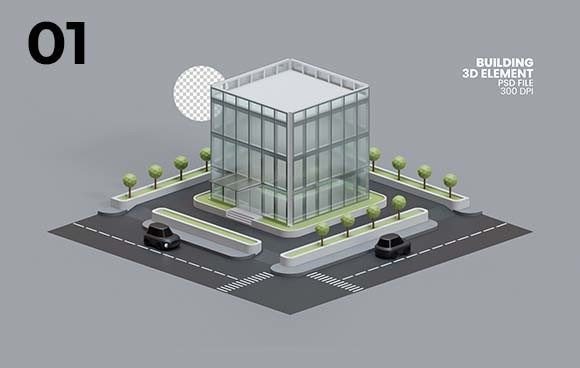
For designers, developers, and visual storytellers, finding high-quality assets that bring urban landscapes to life can be a challenge. Enter Architecture Building PNG 3D Elements, a versatile set of isometric render illustrations featuring office buildings, hotels, and apartments—all in transparent PNG format at an impressive resolution of 2160 x 3840 pixels and 300 DPI. These elements are more than just images; they’re tools that help you create detailed cityscapes quickly and effectively.
What Are Architecture Building PNG 3D Elements?
These are professionally crafted 3D architectural illustrations designed for use in digital compositions. Each element—such as the office building, hotel, or apartment—is rendered in an isometric perspective, which provides a balanced and realistic view without the complexity of traditional 3D modeling software. The transparent background ensures seamless integration into any design project, from infographics to website mockups and marketing materials.
The collection includes 10 individual files, each representing different types of buildings commonly found in modern cities. Whether you're illustrating a futuristic metropolis or a quaint residential area, these elements give your visuals depth, structure, and authenticity.
Why They Matter to Designers and Content Creators
In today’s visually driven world, compelling imagery can make or break a project. Architecture Building PNG 3D Elements offer a practical solution for those who need to convey complex ideas with clarity and style. Here's why they matter:
- They save time: Instead of creating every building from scratch, you can drag and drop pre-designed 3D models into your layout, accelerating the design process significantly.
- They support creativity: With a variety of structures available, you can experiment with different combinations and arrangements, enabling more dynamic and original cityscape designs.
- They enhance communication: Visuals using these elements help stakeholders understand spatial relationships and design concepts faster and more clearly.
1. Presenting Urban Development Proposals
Architects and urban planners often need to present development proposals to clients or city officials. Using Architecture Building PNG 3D Elements allows them to build a composite cityscape that illustrates potential changes to the skyline. For instance, placing an office building next to a hotel and a few apartment blocks helps visualize how new construction might affect existing neighborhoods.
This method reduces the need for expensive 3D rendering software while still delivering professional-grade visuals. It also makes it easier to update presentations as plans evolve, since swapping out one building for another takes seconds rather than hours.
2. Creating Infographics and Reports
Infographics are powerful tools for conveying data in a digestible format. When explaining topics like population density, real estate trends, or infrastructure growth, adding an isometric city with different building types can illustrate points far better than text alone.
Imagine a report on commercial vs. residential space in a growing city. By layering the office and apartment PNGs, you can show the balance between work and living spaces. This kind of visual storytelling is both engaging and informative, making it ideal for educators, bloggers, and marketers alike.
3. Enhancing Game and App Environments
Freelancers and small studios working on mobile apps or games can benefit greatly from these assets. The isometric style is widely used in 2D game design to simulate a 3D environment without the computational overhead.
By combining multiple buildings, developers can craft immersive city scenes for strategy games, simulation apps, or interactive maps. Since all elements have consistent scaling and detail levels, they fit together naturally, helping maintain a cohesive look across the entire virtual world.
Who Can Benefit Most from These Assets?
While anyone involved in digital design could find value in these elements, certain professionals will see the most impact:
- Graphic designers: Looking to add architectural realism to their projects without investing in 3D modeling tools.
- Marketers and advertisers: Needing to showcase real estate developments or urban brands in a visually appealing way.
- Web developers and UX/UI specialists: Seeking quick and scalable ways to prototype layouts or user interfaces involving city environments.
- Bloggers and content creators: Wanting to produce eye-catching posts about architecture, city planning, or travel destinations.
- Small business owners: Planning to incorporate city visuals into branding, packaging, or promotional materials.
Each of these groups has unique needs, but all share a common goal: to communicate ideas effectively through visuals. These PNGs serve as a bridge between concept and presentation.
How to Use These Elements Effectively
To get the most out of Architecture Building PNG 3D Elements, consider these tips:
- Layer wisely: Combine different buildings to reflect real-world urban diversity. Group similar structures together to emphasize zoning or functionality.
- Adjust lighting and shadows: While the images are already well-rendered, subtle adjustments in post-production can help integrate them into different backgrounds more naturally.
- Use for multiple scales: The high-resolution PNGs allow for zooming in or out without loss of quality, making them suitable for everything from thumbnails to full-page posters.
- Mix with other assets: Pair these with roads, trees, people, or vehicles to create a complete scene. Their transparent backgrounds make this easy.
One example of effective use is in a tourism brochure for a coastal city. A designer might place a hotel by the water, an office block in the central district, and apartment buildings nearby. Adding streets and greenery around them completes the scene, offering readers a clear image of what to expect when visiting.
Advantages Over Traditional Methods
Compared to manually drawing or generating 3D models from scratch, these ready-made elements offer several advantages:
- Time efficiency: No need to model each structure individually. Just assemble them as needed.
- Consistency: All elements follow a uniform artistic style and scale, ensuring a polished final composition.
- Flexibility: You can easily reposition, resize, or re-color the buildings to suit your specific design goals.
- Accessibility: Ideal for users who may not have access to advanced 3D software but still require high-quality visuals.
This approach is particularly useful for entrepreneurs or startups needing to create marketing collateral quickly and affordably. Rather than hiring a 3D artist for a single scene, they can use these elements to build a custom illustration in-house within minutes.
Possible Limitations and Considerations
Although Architecture Building PNG 3D Elements are highly functional, there are some considerations to keep in mind:
- Customization limits: While you can move, scale, and color-adjust the buildings, deeper modifications (like changing structural details) may require additional editing tools.
- Style consistency: If your project requires a completely custom architectural aesthetic, these assets may not align perfectly with your vision.
- Contextual use: Best suited for conceptual or illustrative purposes rather than photorealistic architectural documentation.
For these reasons, it’s important to assess whether these elements match your project’s requirements before committing to them. However, for many applications, especially in marketing and education, they provide an excellent balance between quality and practicality.
Practical Recommendations for Getting Started
If you're considering using these assets, here are a few recommendations to help you start:
- Plan your layout: Before importing the PNGs, sketch a rough idea of how you want the city to look. Decide on placement and hierarchy.
- Use layers in design software: Programs like Adobe Photoshop or Illustrator allow for precise control over positioning and blending.
- Test in different formats: Ensure the assets look good in both print and digital media. Their high resolution supports both.
- Combine with vector elements: For added flexibility, pair the PNGs with vector-based icons or text for scalability and editability.
Additionally, always credit the source if required, and verify licensing terms to ensure compliance, especially for commercial projects. Many asset providers offer usage rights that are flexible enough for creative professionals but it's wise to double-check before publishing.
Final Thoughts on Design Efficiency and Impact
Design is not just about aesthetics—it’s about solving problems and communicating ideas efficiently. Architecture Building PNG 3D Elements simplify the creation of urban scenes, allowing you to focus on the message rather than the mechanics of design. Whether you're presenting a proposal, crafting a visual story, or designing an interactive experience, these assets provide a strong foundation.
With their transparent backgrounds and high resolution, these files are adaptable to a wide range of projects. And because they come in a set of 10, including office, hotel, and apartment buildings, you can build diverse and believable cityscapes without the need for extensive modeling or photo sourcing.
Ultimately, Architecture Building PNG 3D Elements empower you to think bigger and create faster. They’re not just components—they’re catalysts for innovation in visual communication.